



























































Maximizing ROI with Data-Driven Marketing Strategies
-
- Sep 24, 2024
- 0
- 10 min read

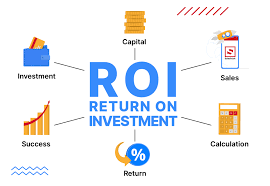
With the growth of technological advancement, the management of business is shifting its goals towards the achievement of higher returns on Investment (ROI) by adopting unique strategies. In particular, Data-Driven Marketing Strategies are known to be one of the most effective approaches to get high outcomes. Marketing insight can basically add value to the communication process through the use of data, thus leading to the improvement of targeting, and as a result improving ROI. In this blog, the writer will explain Data-Driven Marketing Strategies and how they are useful for the overall ROI, as well as trimmings to this major point such as the Marketing ROI, Data Analytics Marketing, and ROI Optimization.
Understanding Data-Driven Marketing Strategies
Data-Driven Marketing is the use of data obtained from sources in targeting, analyzing and making decisions about the marketing strategies to employ: Data-Driven Marketing. This approach tends to help organizations to identify and comprehend their customers and their behavior patterns in order to anticipate behavior and marketing objectives. The main aim of this book Data-Driven Marketing Strategies is to meet the need of guaranteeing that marketing initiatives are creative and evidence-based, thus improving the efficacy of the campaigns.
Data can be gathered through customer feedback or through interaction with them, through social media signals, website statistics and sales figures. Such information can enable marketers to understand customers’ preferences, behavior and needs to be able to design suitable marketing strategies. To provide the substantial knowledge about the importance of this aspect, here is the definition of Marketing ROI: Marketing ROI is the percentage increase of sales that results from a specific marketing investment as compared to the cost of the investment.
Why Else There Must Be Focus on the Marketing ROI
Marketing return on investment commonly known as ROI is another very important metric that determine the ratio of the amount of profit marketing is making to the actual cost of the marketing campaign. A higher percentage on the Marketing ROI means that the campaign enhances the sales and the profits while a lower percentage could signal the need to rethink strategies that were used in marketing.
Accessibility to tools that deliver maximum Marketing ROI cannot be overemphasized as it matters a lot to the profitability of businesses . Such an approach allows companies to use evaluated measures to focus on the right marketing strategies that in turn maximize the returns on marketing budgets. This is why Data-Driven Marketing Strategies used for enhancing the performance of the marketing strategies come into play.
Best Data Driven Marketing Strategy for ROI
Enhanced Customer Targeting
There can be no doubt that one of the greatest advantages of Data-Driven Marketing is the fact that it helps to customize the targeting of customers. Using data, it becomes easier for various businesses to segment certain customer groups, and market messages that such segment would respond to favourably. The above move helps in boosting the probability of achieving an overall conversion because customers are receptive to messages that are close to their hearts. Hence, businesses can experience dramatic improvement of ROI Metrics from Marketing.
Optimizing Marketing Channels
Data-Driven Marketing Strategies also help a business to determine the most suitable marketing communication techniques in reaching out to the target market. This means that based on the performance of the various channels including social media, emails or advertising, marketers can then adjust how much money they spend on them. This ROI Optimization helps to ensure that the most income producing channels are provided with more resource, thus maximizing overall Marketing ROI as a result.Marketing return on investment commonly known as ROI is another very important metric that determine the ratio of the amount of profit marketing is making to the actual cost of the marketing campaign. A higher percentage on the Marketing ROI means that the campaign enhances the sales and the profits while a lower percentage could signal the need to rethink strategies that were used in marketing.
Accessibility to tools that deliver maximum Marketing ROI cannot be overemphasized as it matters a lot to the profitability of businesses . Such an approach allows companies to use evaluated measures to focus on the right marketing strategies that in turn maximize the returns on marketing budgets. This is why Data-Driven Marketing Strategies used for enhancing the performance of the marketing strategies come into play.
Best Data Driven Marketing Strategy for ROI
Enhanced Customer Targeting
There can be no doubt that one of the greatest advantages of Data-Driven Marketing is the fact that it helps to customize the targeting of customers. Using data, it becomes easier for various businesses to segment certain customer groups, and market messages that such segment would respond to favourably. The above move helps in boosting the probability of achieving an overall conversion because customers are receptive to messages that are close to their hearts. Hence, businesses can experience dramatic improvement of ROI Metrics from Marketing.
Optimizing Marketing Channels
Data-Driven Marketing Strategies also help a business to determine the most suitable marketing communication techniques in reaching out to the target market. This means that based on the performance of the various channels including social media, emails or advertising, marketers can then adjust how much money they spend on them. This ROI Optimization helps to ensure that the most income producing channels are provided with more resource, thus maximizing overall Marketing ROI as a result.
Improving Customer Retention
The truth is that customer retention is always cheaper than customer acquisition. Using Data Analytics in Marketing, a business is able to detect such issues in customers and identify the likelihood of churnage. Therefore, if these problems are solved in advance, for example, by offering individual offers or enhancing service, more consumers will be loyal to certain companies. It also increases Marketing Strategy ROI which leads to the overall success of the business in the future.
Real-Time Campaign Adjustments
Another benefit of Data-Driven Marketing is flexibility of marketing campaigns in terms of their modification during their ongoing process. Campaign performance can be monitored on real-time basis and results analyzed to pin point what needs to be changed so as not to affect the entire business. This agility makes sure that the marketing campaigns are effective and sustainable within a given market environment, and when there is a shift in the market or the customers’ preferences, the Performance Marketing strategies improved leading to better results and hence increasing the overall ROI.
Making Predictions for the Upcoming Campaign
Predictive Analytics is another useful weapon in the weapon arsenal of Data-Driven Marketing Strategies. Hence, through historical data analysis, business organizations can estimate the likelihood of its customers’ behavior and trends in the future, which will consequently aid its planning and marketing strategy. ROI Optimization is achieved when, with the use of predictive analytics, the marketer concentrates on the best targeted approaches to give high Marketing Strategy ROI with limited risks of resource waste.
Implementing Data-Driven Marketing Strategies
In essence, there is a systematic way that has to be followed by businesses if they are to fully embrace Data-Driven Marketing Strategies. Here are some steps to guide you through the process:Here are some steps to guide you through the process:
Data Collection and Centralization
The first stage that must be enacted in Data-Driven Marketing is Data gather and consolidate: Regardless of the sources of the data to be used, they should be collected and stored in a central repository. This includes but not limited to customer data, sales data, website traffic, customers’ engagement on social media, and many others. Housing this data in a single location gives the businesses a chance that any marketing decisions made are made based on a consolidated view of the clients.
BI for Decision Making
After the data has been collected, it is important to go ahead and analyze it in order to come up with valuable information that can be used. It is the process through which data is analyzed with an aim of establishing relationships or patterns that may help in the marketing processes. An example of a tool used to interpret data is Google Analytics, others include the customer relationship management software and even machine learning algorithms to arrive at something that enterprises deem valuable enough to be used in future marketing strategies.
Audience Segmentation and Targeting
By using information gained from the analysis, the businesses are then able to classified their target market along the demographical, behavioral and even past purchasing behaviors. Through Audience Segmentation, people are well positioned to make relevant offers to their clients, and every message sent by the company suits the person receiving the message appropriately. This kind of targeting is important especially for enhancing the Marketing ROI as it will enhance customer attention and poll.
Campaign Development and Execution
From the above-discussed data analysis and audience segmentation, it is possible to design and implement a suitable marketing strategy. Such campaigns should therefore seek to satisfy the needs, wants and grievances of the different customers. With relevant content and offers, business can enhance their over all marketing communication efforts hence improving the overall ROI Metrics in Marketing.
Performance Monitoring and Optimization
DPMA is actually an ongoing process of the product, whereby its performance has to be monitored frequently and improved upon. Campaign monitoring is a critical aspect of any campaign once it has been set and the major factors that ought to be monitored include click through rates, conversion rates, and return on investment. This means that results of these metrics can be monitored in real-time so that businesses can make corrections where necessary to maximize on them.
Leveraging Automation and AI
Data-Driven Marketing Strategies can be greatly improved by the duo of Marketing Automation and Artificial Intelligence (AI). While automation tools enable outsourcing of daily work including sending out emails and posting on social media, AI offers exploratory industry trends and forecast. The use of such technologies will allow firms to expand its marketing operations and achieve maximum Marketing ROI.
Challenges and Considerations
However, there are various difficulties associated with Data-Driven Marketing Strategies even though they have so many advantages? Some challenges that business may experience include data privacy constraints, the nature of data analysis which is intricate, and human resource specialized technical experts. Here it is crucial to emphasise that Data-Driven Marketing should be addressed with a proper strategy and resources devoted to changing the state of affairs.
In addition, businesses need to follow measures set by global data protection laws like General Data Protection Regulation (GDPR) and California Consumer Privacy Act (CCPA) to build the customer’s trust and to avoid legal fines. The customer relationship involves collecting and using data to create and maintain successful relationshios with the customers and this must be done in a transparent manner.
Conclusion
ROI on its data driven marketing strategies must thus not only be optimized but needs to be in fact, an imperative to any strategic marketing approach today. Using data to make marketing decisions means that organization’s marketing campaigns will be more precise, productive, and cost-effective thus yielding a higher marketing ROI. The essence is in the generation of proper information, its analysis and application of measures that would appeal to your audience. If executed in the right way, Data-Driven Marketing can revolutionise your company’s marketing strategy and deliver a step change in Marketing ROI and sustainable business success in a Logo world.

