 technicalmonks
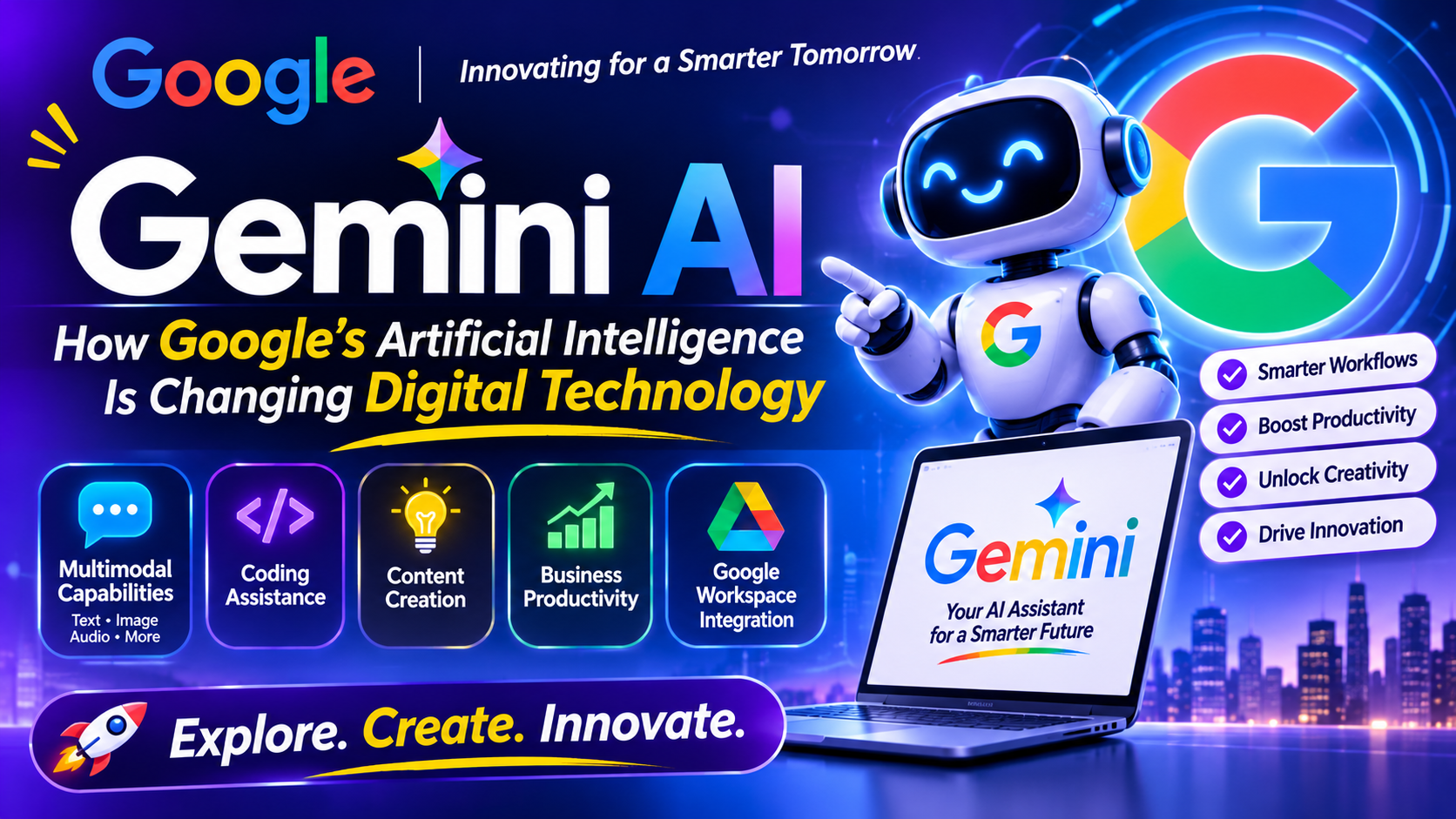
Gemini AI is an AI system developed by Google that is transforming the modern digital landscape. With a range of skills, from summarizing information and creating content to helping companies build software and automating daily tasks, Gemini is one of the many AI platforms helping to change the way we work.
With companies adopting AI across all industries, Gemini AI is gaining attention among students, programmers, creators, entrepreneurs, and technology experts. It is not just centered on chat interactions but also on leveraging AI for research, coding, creative projects, and productivity. Knowing more about how Gemini AI functions, where and how to use it can be helpful in knowing the intersection of AI and daily life.
Inside Gemini AI: What Makes Google’s AI Platform Different?
Gemini AI is the AI model and assistant experience developed by Google. It leverages large language models (LLMs) that understand the prompt, process it, and generate responses based on the context.
Another key trait of Gemini is its multimodal capabilities. This means that Gemini can process multiple modes of information, such as text, visual, audio, and other available modalities.
For instance, you may upload an image and ask questions about it, drop off documents to be summarized, or have complex topics explained to you.
Gemini is accessible via web and mobile experiences, with certain capabilities incorporated into specific Google products and services. The models and features available to you depend on your account, subscription, and region.
Beyond Text: How Gemini Understands Different Types of Information
Early digital assistants were limited to answering questions in written form. However, emerging AI technology is building on that knowledge by allowing for multiple forms of input.
Gemini is truly a multimodal service, so you can engage with data through many modes.
Some applications include:
- Image questions: Upload a photo, a screenshot, or a diagram and ask questions about it.
- Document comprehension: Attach supported files, then get summaries, explanations, or important details.
- Audio Interaction: Utilize available voice interactions to interact with the AI assistant.
- Visuals: Read about the AI-generated images and AI editing, where they are available.
- Video Understanding: Experiment with supported video inputs and build with creative video-generation tools, based on availability.
These features enable the use of AI interaction to be more versatile, as they allow the user to submit data in whatever format they find most applicable.
Gemini AI for Business: From Everyday Tasks to Digital Processes
Businesses are increasingly exploring artificial intelligence to improve productivity and simplify routine operations.
Gemini can assist with several business activities when used with appropriate human review.
Customer Communication: Businesses can use AI to prepare email drafts, organize customer inquiries, and create response templates.
Market Research: Entrepreneurs can ask Gemini to organize research questions, summarize supplied information, and compare business concepts.
Content Development: Marketing teams can use it to generate article outlines, social media ideas, product descriptions, and campaign drafts.
Data Interpretation: Supported documents and spreadsheets can be analyzed to identify patterns and organize information.
Business Planning: Companies can use AI assistance to prepare project outlines, presentation structures, and operational plans.
These applications can reduce repetitive work and help employees focus on decision-making, customer relationships, and business development.
From Simple Prompts to Software: Gemini AI for Developers
Artificial intelligence is changing how software developers write code.
If you are a developer, Gemini can help you by writing code, providing explanations about how to code, spotting bugs, and recommending alternative methods to implement.
For instance, a developer working on a website can request a basic HTML template, request some CSS enhancements, or check out some JavaScript capabilities.
It can also assist you with unfamiliar programming libraries, and it can break down complex technical problems into a series of steps.
A third option is code review. Developers can submit relevant code snippets and request that GLLM help to spot potential bugs, readability or speed problems.
There is no guarantee that the generated code is completely bug-free, so it should always be tested before deploying it into production. Security flaws, incorrect assumptions, and other problems can still exist.
Content Creation and Research: A New Digital Workflow
You will need to undertake several tasks as part of content creation, including:
Used in this manner, it can support this process by allowing the creator to take notes, organize thoughts, and write initial drafts.
Blog authors can look up it to generate article outlines, check out different topics, prepare intros and also discover sentence structure. Marketers can brainstorm ad ideas as well as compose multiple variations of ads.
For research activities, users can submit documents and inquire about information relevant to the documents. Research-oriented features are also part of the Google Gemini experience, depending on the features and plan.
Google also announced a new feature within Gemini that will enable creation and editing of documents, so you will be able to create and edit supported files via chats.
However, information obtained using AI must be verified by reputable sources before any kind of publication. For example, when articles include statistical analysis, technical details, or business assertions.
Gemini AI & Google Workspace Ecosystem
Another key feature of Google’s AI is its relationship with the rest of the productivity ecosystem.
Gemini features can be accessed in certain Google services, such as Gmail, Google Docs, and other Workspace apps, within the available accounts and tiers.
They can be used for tasks like helping to write emails and organize text, as well as summarizing and working on documents.
For businesses, this offers a chance to introduce an AI helper into current processes rather than relying on a standalone app.
Nevertheless, companies must audit their account configurations, administrators, and data management policies prior to deploying AI features in enterprise settings.
What Users Need To Know About Gemini AI Before They Use It
As mentioned, Gemini has several AI features; however, it’s important to be aware that there are times when artificial intelligence may not be accurate.
Responses can include false facts, over-simplified explanations, and out-of-date information. Always verify critical information before using it in an expert, financial, legal, or technical capacity.
Privacy is another concern. Do not upload critical business files, passwords, customer information, or other private documentation without understanding your data-use options and policies.
A good answer also varies based on the prompt. Giving instructions, relevant context, and a specific format for the output can lead to more useful results.
What’s Next? The Future of Gemini AI and Digital Innovation
This release of Gemini is just one step along the road towards multimodal, more powerful AI.
Upcoming AI experiences will incorporate smarter reasoning, engaging content, software support, and integrations across various software.
Google’s continued innovation also highlights how AI helpers are evolving from being straightforward question-answering systems to helping with more advanced tasks and creative processes.
And for companies, this can affect digital marketing, research, development of software, customer service, and internal operations.
As these systems become more sophisticated, supervised use and safeguards to protect human life will continue to be vital.
Conclusion
Gemini AI is a significant piece in Google’s AI puzzle. With a focus on text, images, documents, code, and productivity, we can see how it can be used to support various types of digital interactions.
Gemini offers a conversational way for students, developers, content creators, and business users to work with information and technology, no matter how you use it.
But adopting AI is about more than using clever tools. Users need to appreciate the limitations of the technology, fact-check the critical pieces, and get privacy right.
With the rapid pace of AI development, it’s likely we’ll continue to be checking in on Gemini for the foreseeable future when we want to consider the impact of AI, modern technology, and digital productivity.