 technicalmonks
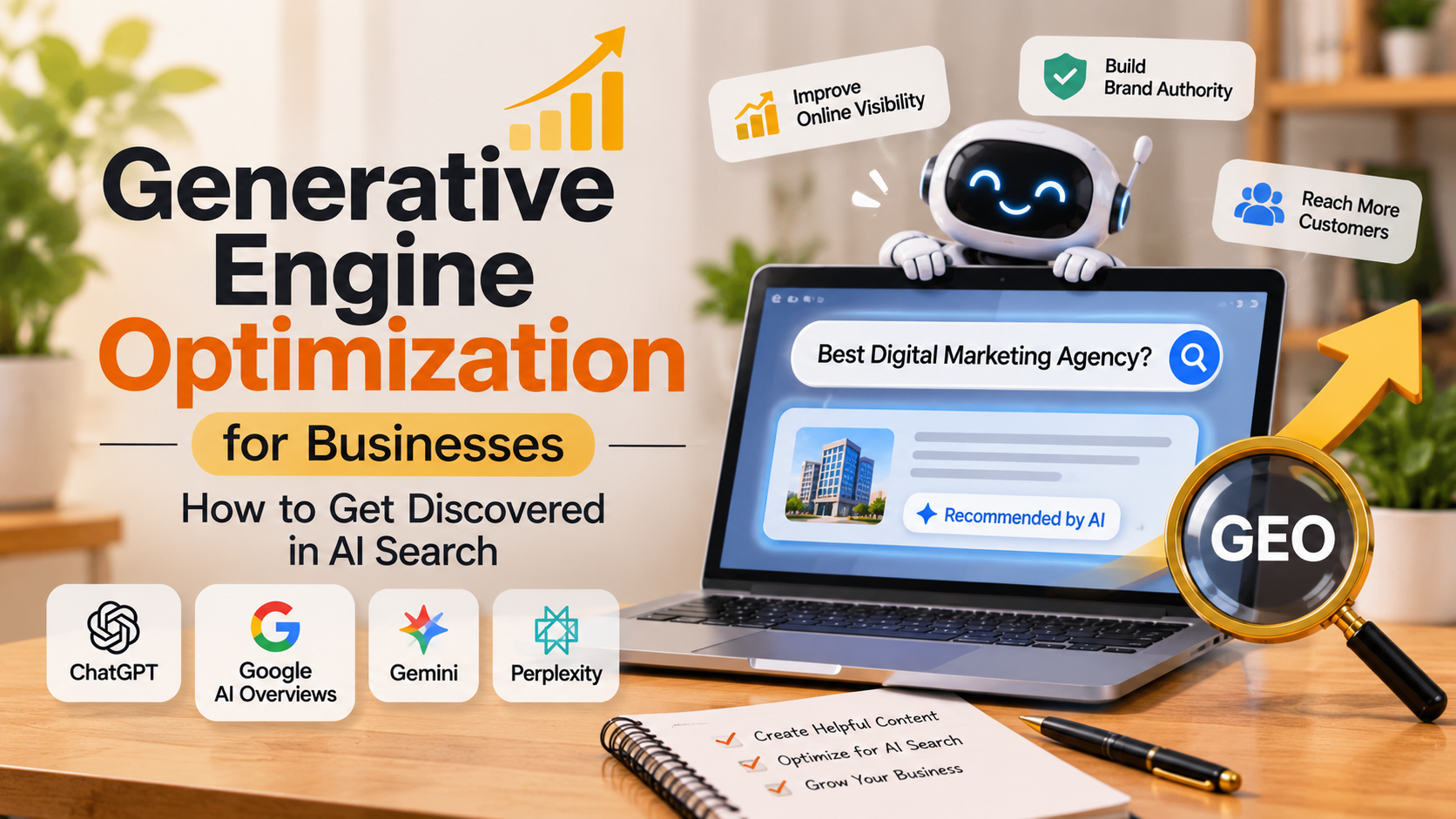
The search habits of consumers are evolving: Years ago, businesses aimed to rank their site on Google, beat competitors’ keywords, and then drive traffic through optimized search listings. Now, many consumers are turning to AI interfaces to search for recommendations, products, and services.
Enter Generative Engine Optimization (GEO), a new flavour of digital marketing that aims to enhance the visibility and representation of your companies and content in answers generated by AI on ChatGPT, Google AI Overviews, Gemini, Perplexity, and more.
For businesses, it means a new way to increase online exposure, establish brand authority, and connect to prospective customers via discovery channels.
What Is Generative Engine Optimization?
Generative Engine Optimization (GEO) is optimizing a brand’s web presence so that a search engine built on generative AI can interpret, cite, and give the brand credit in generated responses.
Traditional SEO is about getting a webpage ranked in search engines. With GEO, the focus is also on how an AI interacts with and sources information from various sites to produce an answer.
For instance, when looking for a credible digital marketing agency, a user may ask an AI tool to provide a comparison of different agencies. This application could then generate names, service options, and helpful data from its “trustworthy” sources.
If your business can clearly describe its services on the site, if there are reliable sources of online content, and if it can offer valuable information, there’s a greater chance that it can be added. But there’s never a guarantee that they will show up in AI responses.
Why GEO Is Becoming Important for Businesses
Customers interact with multiple platforms during the course of their research. They might stumble upon your business through Google, learn the conversation happening on social media, visit a review site, and consult an AI assistant for suggestions.
It does make a tougher landscape to rank in than a handful of keywords.
Generative AI Search Use Cases: Ecommerce and marketing research are among the use cases for generative AI search cited in an EMARKETER 2026 report. Here’s how it’s making it easy to put GEO into the SEO mix:
Here are some reasons why businesses should start paying attention to GEO:
- Additional Opportunities for Discovery: AI platforms offer another method for prospective clients to discover brands.
- If an individual comes across an appropriate, AI-generated answer that mentions the business, it could raise awareness among customers.
- Customer research: Helpful online information can enable people to research services before they contact a company.
- Those who develop their digital presence early will be able to face the new habits of discovery.
- Sustainable Visibility: Strong content and factual consistency underpin both conventional search and newer AI innovations.
How GEO Supports Various Business Profiles
It’s useful for other types of websites too. GEO isn’t just for tech firms or big companies. Every kind of business can be enhanced by this online presence.
1. Local Businesses
Locally owned businesses such as restaurants, repair shops, hospitals, and many others benefit from people finding the right business information. Ensure local business profiles, services, opening hours, and real reviews are current.
2. E-Commerce Businesses
Online stores could also help consumers by providing easily understood information, in this way offering detailed descriptions, specifications, the cost, the availability, and the return policy of each product.
Product pages that are well put together can show customers how to compare products and see what a business is selling.
3. Digital Agencies
A marketing agency can publish blogs that have helpful tips, information about the services, case studies, as well as questions asked by customers, and publish answers to such questions. This will further establish the agency as an industry expert.
4. B2B Companies
Businesses selling products or services to other companies often have longer buying journeys. Detailed service pages, industry research, product documentation, and informative articles can help decision-makers evaluate available solutions.
Practical GEO Strategies Your Business Can Enact
It would be wrong to have to give up SEO. There are still many similar practices and, with good content strategies, one can improve and optimize the other.
1. Publish Helpful and Original Content
Produce content that addresses customers’ real queries. Describe the industry, give examples, and share relevant information instead of just sharing posts that are prone to receive a higher number of hits.
Original insights and background experience add value.
2. Update Your Business Details
Ensure your website, business listings, service descriptions, and contact info are correct. Use the same business name and service descriptions where appropriate.
Misinformation Can Cause Customer Confusion
3. Organise Content Clearly
Format your writing with headings, short paragraphs, lists, and FAQs. Deliver Key Concepts and Facts clearly so the reader can easily interpret your content.
A logical page layout is much better for search engines to interpret.
4. Build Brand Authority
Publish your insight articles, unique customer success stories, valuable resources, and original research. Mentions from high-quality sites and industry publications can contribute to positive brand mentions online.
Resist the urge to purchase fake citations, or, if you do, create second-rate backlinks.
5. Use Structured Data Where Relevant
Structured data like proper Organisation, Local Business, Product, and Article schema can tell search engines something about your website.
May also help with issues where AI citations will not always be available.
6. Maintain Technical Website Quality
Ensure your site loads correctly, is mobile-friendly, secures connections, and enables search crawlers to access critical pages.
Technical SEO continues to be a crucial part of how your website can be found online.
How to Measure GEO Performance
That is one problem with GEO: traditional keyword rankings aren’t the whole picture of AI visibility.
There are a few metrics to keep an eye on for businesses to gauge if their endeavors are yielding valuable results:
- See if the AI platforms are making reference to your business in context.
- Source Citations: Keep track of if and how your website is cited in answers created by AI.
- Leverage website analytics to analyze traffic driven by AI engines where you can see the referral source.
- Branded Searches: See if you have an increase in the number of searches that directly include your name.
- Customer Enquiries: See if you’re generating business leads and enquiries through your online presence.
Since the optimal response from a robot can differ by question, location, platform, and time of day, companies should track trends, instead of relying on a specific search result as a hard measure of performance.
Common GEO Mistakes Businesses Should Avoid
With demand for GEOs growing, companies will be increasingly tempted to take shortcuts or make unachievable promises.
Don’t publish large volumes of content that was written by AI and appears to be low quality without human moderation. Don’t generate fake reviews, business details, or backlinks to manipulate recommendations.
Another mistake is to think of GEO as an alternative to classic SEO. Search engine optimisation, good content, technical infrastructure, and a good reputation of the brand still count.
Businesses also need to tread carefully with services that claim to secure their spot in ChatGPT or other AI-generated solutions. Any reputable optimisation company cannot promise that.
Final Thoughts
Generative Engine Optimization is a term used to describe the new era of business marketing. As people look for products and services using AI engines, it is time for companies to look beyond ranking and start thinking about establishing a safe online reputation.
With the creation of helpful content, consistent business data, enhanced website architecture, and brand building, companies can ready themselves for shifts in online discovery behaviors.
GEO is developing; therefore, companies should not expect miracles and should keep working with patience and consistency. The right mix between traditional SEO practices and more practical GEO tactics can help companies increase their online visibility and be ready for the new era of online marketing.