 technicalmonks
Even if you have a fantastic website that has terrific product lines, useful services, and material, you’ll be lost as to how to get the right individuals to the website simply by putting it on the web. You need to inform the engines that you have an online page that discusses information, what your web page is structured like, and which information is relevant.
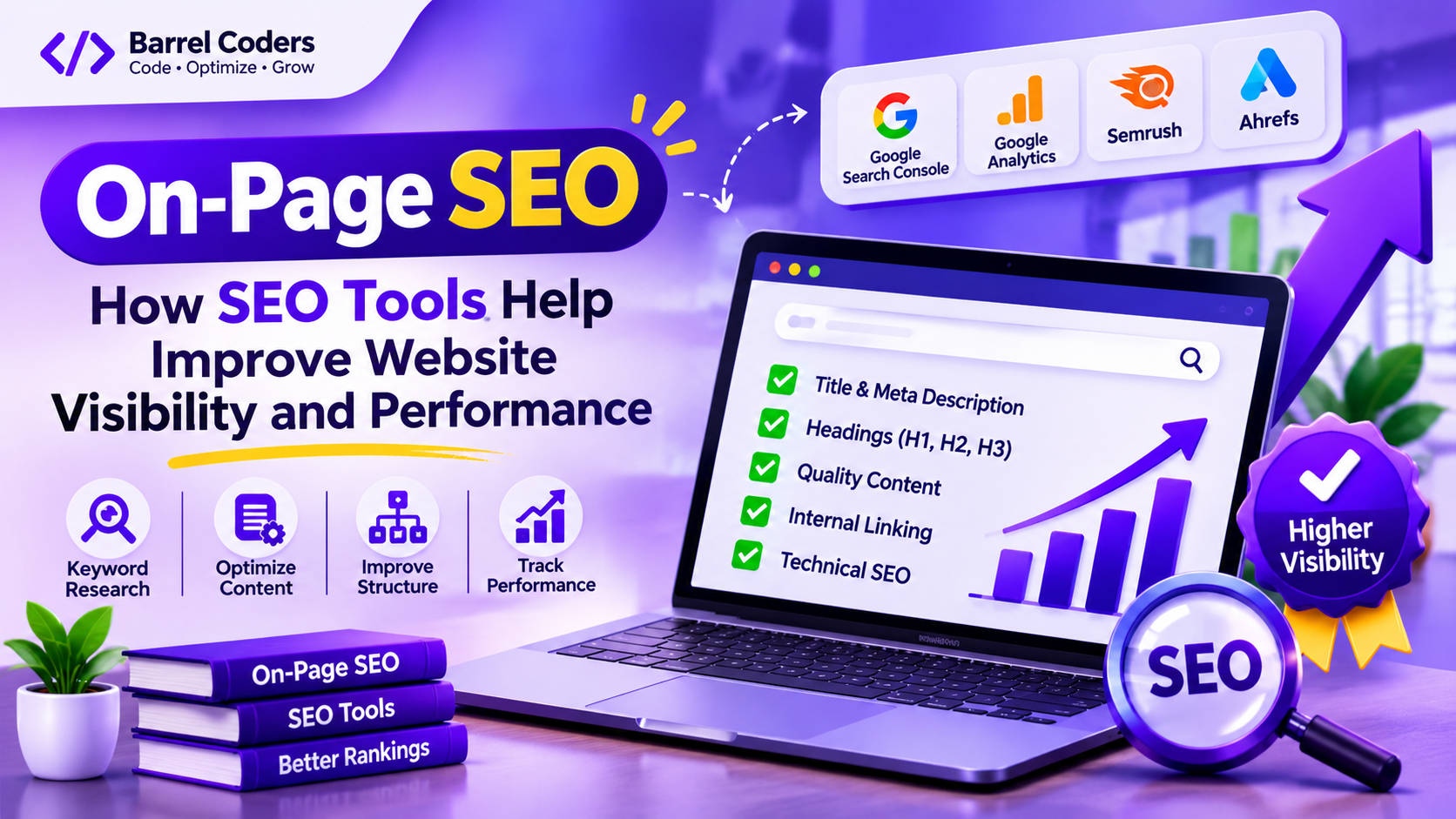
Today, using the right SEO Tools is the best way for webmasters to review content on their web pages, establish potential areas of optimization, track the progress of keyword searches, and get their website structure ready to make their websites easier to crawl and index for search engines.
On-page SEO isn’t just stuffing keywords or modifying a few headings. It’s enhancing different elements on a single page to make it a valuable, well-structured, and search-friendly experience.
What Is On-Page SEO?
On-page SEO involves optimizing the content of a web page (page titles, headings, written content, images, URLs, internal links) for the purpose of establishing the context and relevance of that page in the eyes of search engines.
For instance, if a digital marketing company publishes an article about marketing using social media, the article should be structured into topics, include appropriate header tags, be clear in content, and link to relevant pages of a website.
Our goal is to create a page that is useful for its target audience and for search engines by demonstrating an understanding of the topic of the page.
On-page optimization is entirely within the control of the website owner and can be easily optimized, unlike off-page SEO, which relies on signals outside a website such as inbound links and branded mentions.
The Importance of SEO Tools for On-Page Optimization
Manual website optimization can get complicated when you have hundreds of pages, plenty of categories, and fresh content.
SEO Tools facilitate various research and analysis tasks. They can help you spot abandoned meta descriptions, broken links, analyze keyword use, look for heading structure issues, and report on technical problems.
This information can guide marketers on which enhancements are worth considering.
Some pages may have search impressions but a few clicks; perhaps a clearer page title and more contextually related meta description would help. Some articles may not be targeted to the search intent – the content of the article may need expanding or reworking.
Tools offer helpful information and can be used for comparison, but the tool’s advice needs to be assessed in relation to the needs of the website and its visitors.
7 On-Page SEO Techniques Using SEO Tools That You Need To Know
1. Conduct Keyword Research and Understand Search Intent
Keyword research is one of the first steps in your on-page SEO process. It helps you understand what people are looking for when they are trying to find information, products, or services.
Google Keyword Planner, Ahrefs, and Semrush can give marketers guidance on what keywords to use, how popular search terms are, and how effective the competition is.
But it’s not enough to just go after the most searched keywords. Search intent plays a role, too.
Alternatively, if someone is searching for “best SEO tools,” you might provide product reviews; however, if someone searches for “how to use SEO tools,” you’d deliver an educational how-to.
Select a main keyword for the page and write content that includes variations related to the keyword in places where they add value to the explanation of the idea. This produces a very targeted piece that should satisfy a particular need of a visitor.
2. Optimize Page Titles and Meta Descriptions
Page titles and meta descriptions indicate the contents of a page. They may also be used by searchers to contextualise your pages when they find your result in the SERPs.
A good title should be descriptive of a page and contain its most important theme, naturally. Do not create overly long titles, duplicate keywords, or make implausible statements.
Your meta description should act as a compelling summary that will persuade the right visitors to click.
These elements are handled within WordPress using tools like Yoast SEO and Rank Math.
For example, an article on website optimization could be entitled “On-page SEO techniques to improve website performance” rather than with a hazy title like “Improve Your Website”.
3. Create a Clear Heading Structure
Headings help to structure your content and divide the text into relevant sections. They guide the reader through an article, especially if it is long, and they give search engines more information about the page.
Each page should usually contain a primary heading with subheadings for further related information.
Use H1 for the main page heading, H2 for the major sections, and H3 as appropriate for support topics.
For instance, an article about SEO tools might break down into sections on keyword research, website audit, content optimization, and performance tracking.
Steer clear of choosing headings just to have as many keywords as possible. Ensure each heading accurately corresponds with the rest of the information.
4. Improve Content Quality and Keyword Placement
Quality content is the key to effective on-page SEO. The purpose of search engines is to deliver information that meets the demand, so any content you create must be accurate, unique, and relevant.
Use the main keyword naturally and strategically in appropriate places, including the title, introduction, and relevant sections of the article. Variations of the keyword can also help add context and avoid repetition.
SEO platforms can spot keyword gaps, related terms, and opportunities for content. A well-optimized score doesn’t necessarily indicate a significant article.
Show examples in actual use. Give ideas of how something is used in practice, clarify terms, provide answers to usual questions, and delete useless words.
The content must be audience-first, with optimization enhancing the human reader’s experience.
5. Optimize Images and Improve Page Experience
Pictures lead to more lively website text; however, badly modified files can influence the speed of loading.
Reduce the size of images before uploading them. Choose the most appropriate file format. Use a relevant file name. Write alternative text that conveys the same purpose of the image.
Use tools like Google PageSpeed Insights and image optimization plugins to discover opportunities for optimization.
Page developers need to consider responsiveness for mobile, navigation, readability of font, and stability of layout.
Optimise visitors’ experience using Google Core Web Vitals. Google’s Core Web Vitals are metrics designed to track loading, interactivity, and visual stability. If you make improvements here, it can have a positive impact on your website and visitors.
6. Build Relevant Internal Links
Internal links are links to other pages within the same website. They are useful for visitors seeking more relevant information and for search engines to crawl your website.
So an article on on-page SEO can reference the techniques of keyword research, site architecture, and backlink auditing.
Make each link descriptive by using meaningful words that will tell the reader what they will find when they click.
Don’t clutter the content by adding excess links or copying the same anchor text across many pages. Every one of your internal links should be purposeful and add value to the content.
SEO crawling tools to find orphan pages, fix internal links, and look for new links between related articles.
7. Monitor Website Performance and Update Pages
The optimization process can be continued after a page is published. With changes in search trends, other web page content, user needs and website performance.
Google Search Console allows webmasters to check their indexing status and optimize the visibility of their websites.
More data about visits to your site and user activity.
Periodically check pages that aren’t visited as often, or that are getting out of date or not performing well in search. Refresh stats, expand text, add missing links, or wherever needed.
Do not make changes to alter the date of publication for the sake of it. New updates should be improvements.
Popular SEO Tools for On-Page Optimization
Different tools support different stages of website optimization.
Google Search Console: Helps monitor search performance, indexing, and website search visibility.
Google PageSpeed Insights: Analyzes page performance and provides suggestions for improving the loading experience.
Ahrefs: Supports keyword research, competitor analysis, backlink research, and content exploration.
Semrush: Provides keyword research, site auditing, competitive analysis, and SEO content insights.
Yoast SEO: Helps WordPress users manage titles, meta descriptions, readability, and other on-page elements.
Screaming Frog SEO Spider: Crawls websites to identify technical issues, broken links, missing metadata, and structural problems.
Assessing tools by website size, budget, and optimization needs is more effective than signing up for everything.
How AI Is Impacting On-Page SEO
So many SEO and content analysis activities are now assisted with the help of AI. Tools can recommend related keywords, find content gaps, identify which pages have traffic, give content ideas or outlines, and much more.
Some tools will also evaluate the search intent and compare existing content to competitor pages.
But the recommended content will not always be correct. When creating content using artificial intelligence, you may end up with wrong information, repetitive explanations, or useless suggestions for keywords.
Human review is still necessary for ensuring originality, factual accuracy, and a natural reading experience.
Conclusion
On-page SEO is an important aspect of designing a website that interacts with visitors and search engines. With proper keyword inclusion, titles, headings, content, images, internal linking, and page performance, companies can develop clearer and more relevant pages.
Right SEO Tools makes this process easier by providing details about the performance of your website and the areas that need enhancement.
All in all, good optimization is going to be a combination of the proper tools, creating quality content, and making frequent improvements to your website. Any business that puts a focus on providing a good user experience, providing accurate information, and constant optimization will increase its visibility in organic search over time.
Off-page SEO is also an important aspect.