 technicalmonks
Take a moment to think about the pace at which technology is changing the world as we speak! Sitting at the core of this fantastic change, we have Artificial Intelligence. Whether it’s your lovable voice assistant, your cutting-edge medical research, or business automation, AI has integrated itself into our lives. What was once alien to science fiction writers is now a part of your daily life.
What Is AI? It’s not merely about building autonomous robots, but building intelligent computer systems that interpret data, identify patterns, produce outcomes, and assist with decision-making. This also means that as AI systems get better and better at all of this, they are opening up a new world of possibilities-and new questions-about who is responsible for what, where privacy is, and how humans will fit into the picture.
Understanding the Concept of Artificial Intelligence
Artificial intelligence is machines learning to do things we would normally think of as human intelligence – such as, for example:… What we see and understand in language, what we see and understand in objects and images, what we understand in data, predict from models, produce new content.
Computers use data, algorithms, and computational models to discover relationships and come up with an answer. Some computers are programmed to work by specific instructions, while others are capable of learning and self-correction, known as machine learning.
Think about how an email app detects spam, or how a GPS application finds the fastest route around traffic. That’s AI pulling in data from the weather, the speed of nearby cars, and dozens of other factors and, in a split second, generating actionable insights.
Different Types of Artificial Intelligence
AI can be classified based on its abilities and operation. Want to learn more?
Narrow Artificial Intelligence
We use narrow AI for a wide range of applications. For instance, smartphones, recommendation engines, facial recognition software, online searches, virtual assistants, and chatbots for customer service are all examples of narrow AI.
General Artificial Intelligence
Per the ultimate ideal, the AI should be able to do all tasks that require intelligence, and not just specific ones. But here’s the catch – it’s still a research goal.
Superintelligent Artificial Intelligence
Artificial superintelligence is a theoretical machine that would outperform humans in all spheres of intellectual activities. More relevant to the future.
Knowing these categories helps you to distinguish between the AI that we currently have and the AI that is still within the theoretical realm.
How AI Is Transforming Different Industries
AI impacts more than just the tech industry. Colleagues in other fields are assessing and adopting smart technology to modernize and advance their work.
1. Healthcare and Medical Research
Healthcare: AI-powered solutions are used to interpret medical images, automate patient records, and identify trends that can be useful to clinical decision-making. Scientists use AI solutions to study biological data and enhance the processes of drug discovery.
They are assisting diagnostic and/or therapeutic procedures to be carried out by doctors; human checking is still very important for any clinical decision.
2. Education and Learning
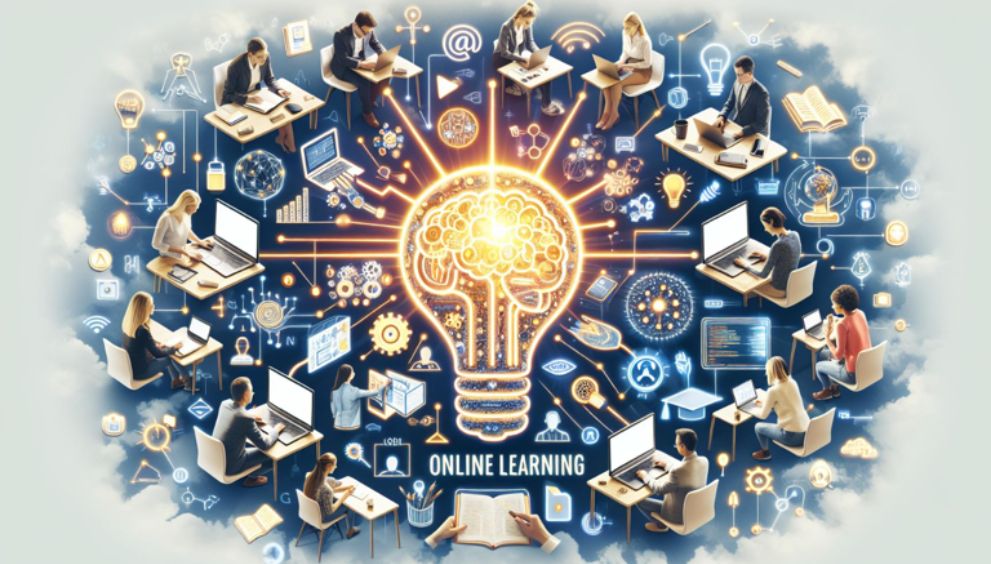
Most recent: “AI is shaping the future of education through personalized learning platforms, automated feedback, linguistic assistance, and intelligent tutoring.
What if you could use these apps to learn difficult topics, practice new skills, and adapt explanations to match your learning pace? And if teachers could also use AI resources to automate the task of preparing lessons and reduce admin pressure?
3. Banking and Financial Services
AI revolutionizes how banks fight fraud, monitor transactions, conduct risk assessment, and provide customer support. These self-learning machines analyze transaction patterns to reveal unusual behavior that warrants further scrutiny.
And of course, chatbots and virtual assistants are there to make your life simple by providing account information and answering frequently asked questions.
4. Manufacturing and Industrial Operations
Manufacturers are combining AI with robotics, sensors, and automated equipment. They use these tools to track production, identify problems with machinery, and even anticipate maintenance issues.
Improve your operations with predictive maintenance to prevent machine downtime and reduce unplanned outages.
5. Retail and E-Commerce
Shopping apps make use of AI to understand customer behavior, recommend the necessary goods, and improve the search features of online shopping. Demand prediction and inventory management are assisted by predictive analytics.
Utilizing these apps allows businesses to make informed business decisions.
The Role of Generative AI in Modern Technology
A key breakthrough in recent years has been generative AI. While most traditional systems are designed to classify or analyze existing data, generative models can create new content learned from data.
Written content, visuals, coding, audio, and other digital content can all be generated and collaborated on from where you are with these software tools – for everything from writing ideas and document drafts to distilling information and inspiring creative processes.
But wait – not everything produced is accurate. There’s a possibility that AI may generate false or confusing answers, which is why human oversight remains critical when using and publishing content.
Advantages of Artificial Intelligence
The increased adoption of AI comes with several benefits when implemented correctly. So, why should you care?
- Increased Efficiency: AI saves you time by automating mundane tasks.
- It manages huge data sets. It recognizes patterns that are impossible to notice manually.
- Superior Customer Journeys: Personalized recommendations, automated assistance, and recommendations make digital services more seamless.
- Fewer Errors: Properly integrated systems make repetitive tasks less prone to human error.
- Innovative: AI assists with research, product design, and innovation.
- Continuous Availability: Some automated services run around the clock without constant human intervention.
The advantages depend on how good the technology is, what data you’ve got, and what you do with it.
Challenges and Risks Associated with AI
As great as AI is, it also comes with challenges that should be managed intelligently. Are you ready for this?
What are potential concerns about using AI apps?
Data Privacy: If a machine learning app accesses personal or business information, data collection and access issues can arise.
if the training data contains bias, AI systems could inadvertently reintroduce bias into the outputs.
Changes in employment: Automation may change the nature of some jobs and reduce demand for particular repetitive tasks, but it may also create opportunities in the areas of technology, data management, and AI applications.
Incorrect Information: ChatGPT responses can be factually inaccurate and should be verified.
Security Issues: Improper handling of AI technology could result in introducing cybersecurity risks or be used to produce false information.
To deal with these issues, we need to have responsible development, clear policies, regulation, and human oversight.
Skills Required in an AI-Driven Future
As intelligent technologies become more widespread, it’s likely that, in many sectors, people will have to learn new skills. Do you have what it takes?
Valuable areas of learning include:
- Fundamental AI literacy and some familiarity with AI tools.
- Data interpretation and analytical thinking.
- Programming and computational fundamentals.
- Problem-solving and critical reasoning.
- Communication and creative thinking.
- Ethical awareness and responsible technology use.
You don’t have to be a professional to be an AI engineer. Having the know-how of how these tools function, along with their restraints, can come in handy for a variety of professions.
What Does the Future Hold for Artificial Intelligence?
AI will continue to become integrated into the applications we use daily, into industry, into our scientific advancements, and into public services in general. Robots, natural language processing, computer vision, and intelligent automation may change the way we do things.
Here’s the catch – technology must be matched with accountability. When decisions have serious consequences, it will continue to be human-only areas that require judgment, innovation, empathy, and ethical decisions.
What will have the most significant impact is the combination of technology, human expertise, and good decision-making. How do you see the future of AI?
Conclusion
Artificial intelligence is changing the way we live and work. Weighing out what AI can do for you? Read on to learn how it is affecting your life today! For instance, you can spot its effects in health care, education, finance, manufacturing, and communication.
Of course, there are privacy, fairness, security, and job concerns, but when developed and deployed responsibly, you can harness AI to become a valuable driver of innovation. So, understanding what AI can (and can’t) do today will help you and others prepare for a future where AI takes the spotlight.