 technicalmonks
Interested in how brands build awareness in a digital world? It’s not simply about the products and services. It’s the online conversation, news media, trade press, customer reviews, and social engagement. It’s the mix of those things that all influences how the world perceives your brand.
The fact is, times have drastically changed, and Digital PR is now an indispensable must-have to secure your brand’s reputation. It combines the everyday knowledge of PR practitioners with digital channels in a way that increases awareness of your brand, builds credibility for your brand, and allows you to connect with the online community.
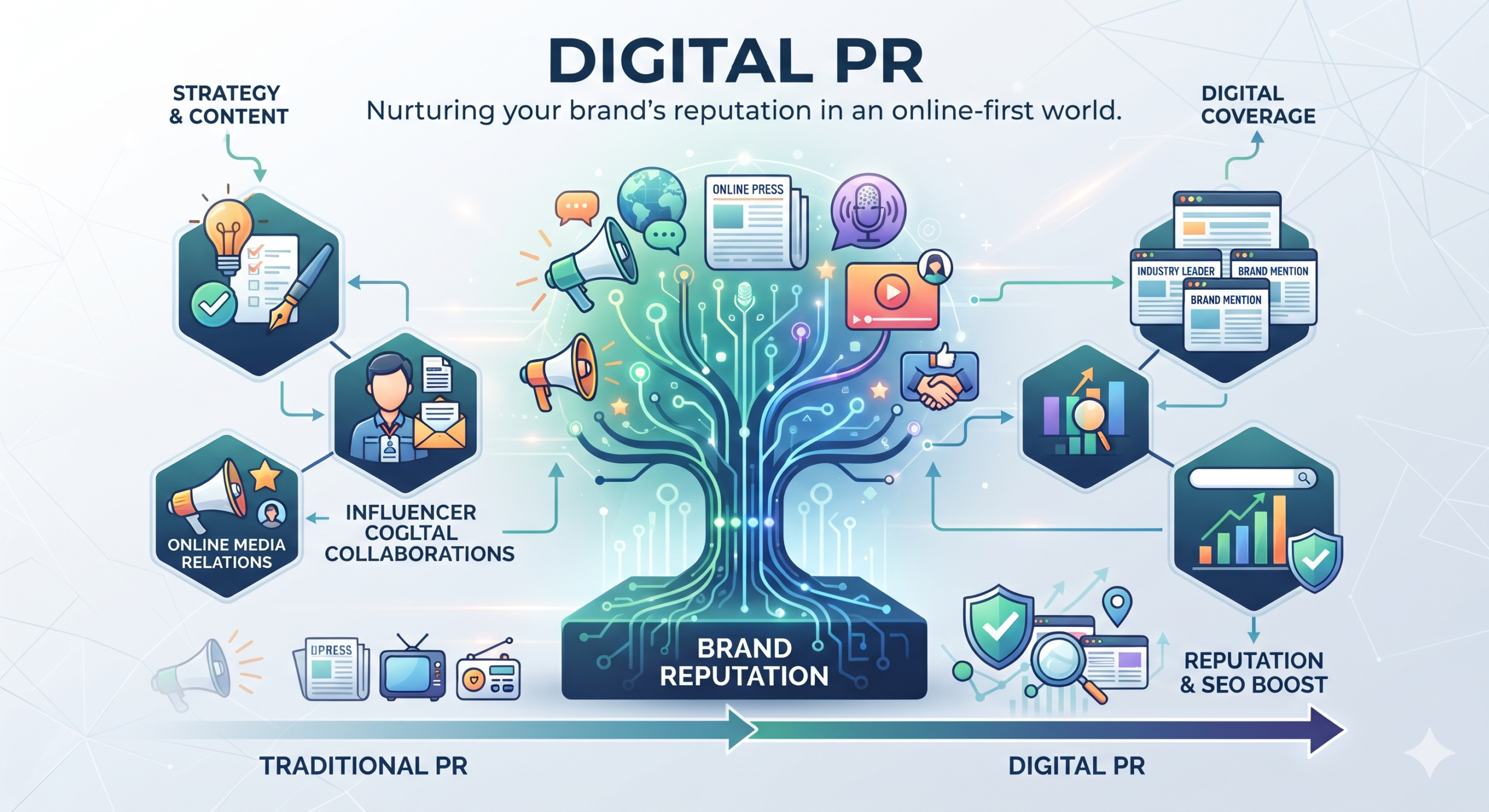
How is it different from classic PR that used to rely mostly on newspapers, television, and other offline channels? Digital PR focuses on using online press, websites, social networks, influencers, and online communities to promote the message.
What Is Digital PR?
When you want to communicate with the world via the web in the most effective way possible, Digital PR is your new best friend. It involves telling newsworthy stories, meeting journalists and publishers, getting media coverage, and starting good discussions about your business.
Think of a tech company launching a new, innovative product. They’ll send a press release to appropriate online news sources. Or a health care provider wants to promote awareness about important topics through industry-related online content. Your organization isn’t just getting “mentions”; it’s spreading information through relevant online sources.
Differences Between Digital PR and Traditional Public Relations
Traditional PR? Keep up relationships with journalists, papers, TV, radio, and traditional media. But Digital PR? It’s even more than that with digital news sites, blogs, podcasts, digital magazines, social media channels, creator communities, and more.
Plus, a major point: measurement. With digital advertising, you can measure referral traffic, online conversations, mentions, backlinks, changes in search engine ranking, and more. Whether you’ve gone digital or not, the goal still holds – doing everything you can to build confidence in your brand and maintain an above-board reputation.
Key Elements of an Effective Digital PR Campaign
1. Online Media Relations
You’ll need the relationships you build with journalists, editors, bloggers, and online publishers to get wider audiences for your stories.
2. Content Preparation
The press releases, expert opinion pieces, research, interviews, and industry news – the precious stones they all seek online.
3. Influencer and Creator Collaborations
Consider this: working with content creators exposes your brand to well-established communities and starts conversations about your products.
4. Reputation Management
Listening to conversations about your online stuff-consumer sentiment, people mentioning your brand-lets you stay in tune with what’s being said and respond.
5. Digital Media Coverage
Getting coverage from the right outlets can help drive brand awareness and establish industry authority.
These actions? They should be integrated, not distinct promotional activities.
Why Digital PR Matters for Modern Businesses
Have you thought about whether your online reputation impacts prospects before they choose? If you were published in a trustworthy publication and disseminated valuable industry content, it would create more brand awareness with your target audience.
Here’s why Digital PR rocks:
– Enhanced Brand Awareness: Internet publicity is an excellent way to introduce your products and services to people who have no clue about your business.
– Increased credibility: Mentions in well-known publications will bump up your brand’s credibility.
– Networking: Chatting with journalists, creators, and industry pros can be the start of a lucrative long-term relationship.
– Referral Traffic: Niche media coverage might entice members of your niche to surf your website.
– SEO Boost: Having editorial backlinks from sites within your same industry can improve your website’s overall visibility in search engines, but don’t rely on links alone.
– Reputation Development: Continual open communication assists in establishing a good reputation.
How to Write Stories Worth Media Love
The hardest part of digital PR? Coming up with stories that people actually want to read about.
Official business alerts? You won’t even notice them. You need to identify significant events, educational info, a shift in the industry, or a fascinating adventure that truly hits home.
Like a fresh study on how consumers behave, an expert opinion on a new craze in the industry, or an explanation of how new tech solves a real-world problem. Good storytelling requires facts, figures, and clarity.
The Connection Between Digital PR and SEO
Digital PR and SEO-different objectives, but what a winning team.
SEO is about improving the visibility of your website on search engine results pages with technical improvements, relevant content, user experience, and other ranking factors. Digital PR is about gaining attention and forming relationships with the right audience via trusted online publications and online communities.
If a well-regarded site mentions your business and includes an editorial backlink, it can help engines discover related content and strengthen your website’s signals of authority. However, don’t assume every media feature will benefit from a backlink. Brand awareness, referral traffic, and customer trust are just as beneficial.
How to Measure the Impact of Digital PR
Curious about the success of your campaign? Measure it against objectives that reflect your goal.
Check these out:
– Number and quality of media placements.
– Brand mentions on relevant sites.
– Referral traffic from online publications.
– Quality and relevance of earned backlinks.
– Audience engagement with your stories.
– Growth in branded search interest.
– Changes in online brand sentiment.
Don’t simply count the number of links or mentions; evaluate the quality and relevance of the coverage.
The Future of Digital PR
The world of digital communications is changing. Leading the way is AI, along with search behaviour, creator communities, and personalized content experiences.
PR pros are seeking new techniques to identify media opportunities, learn about consumers’ emotions, and analyze campaign success. Meanwhile, original research, expert insight, honesty, and trusted sources are all becoming more valued. With increasing volumes of online content, readers and publishers crave precise, unique, and useful content even more.
Conclusion
Digital PR is a new form of brand communication that connects brands and brands’ audiences using authentic digital channels. Combining media relationships, educational content, image management, and targeted digital outreach, digital PR helps brands succeed amidst the noise.
It’s about trust, not the latest up-to-the-minute flash. Only the brands that continually push out relevant stories and forge genuine industry connections will develop an indestructible brand and digital presence.