 technicalmonks
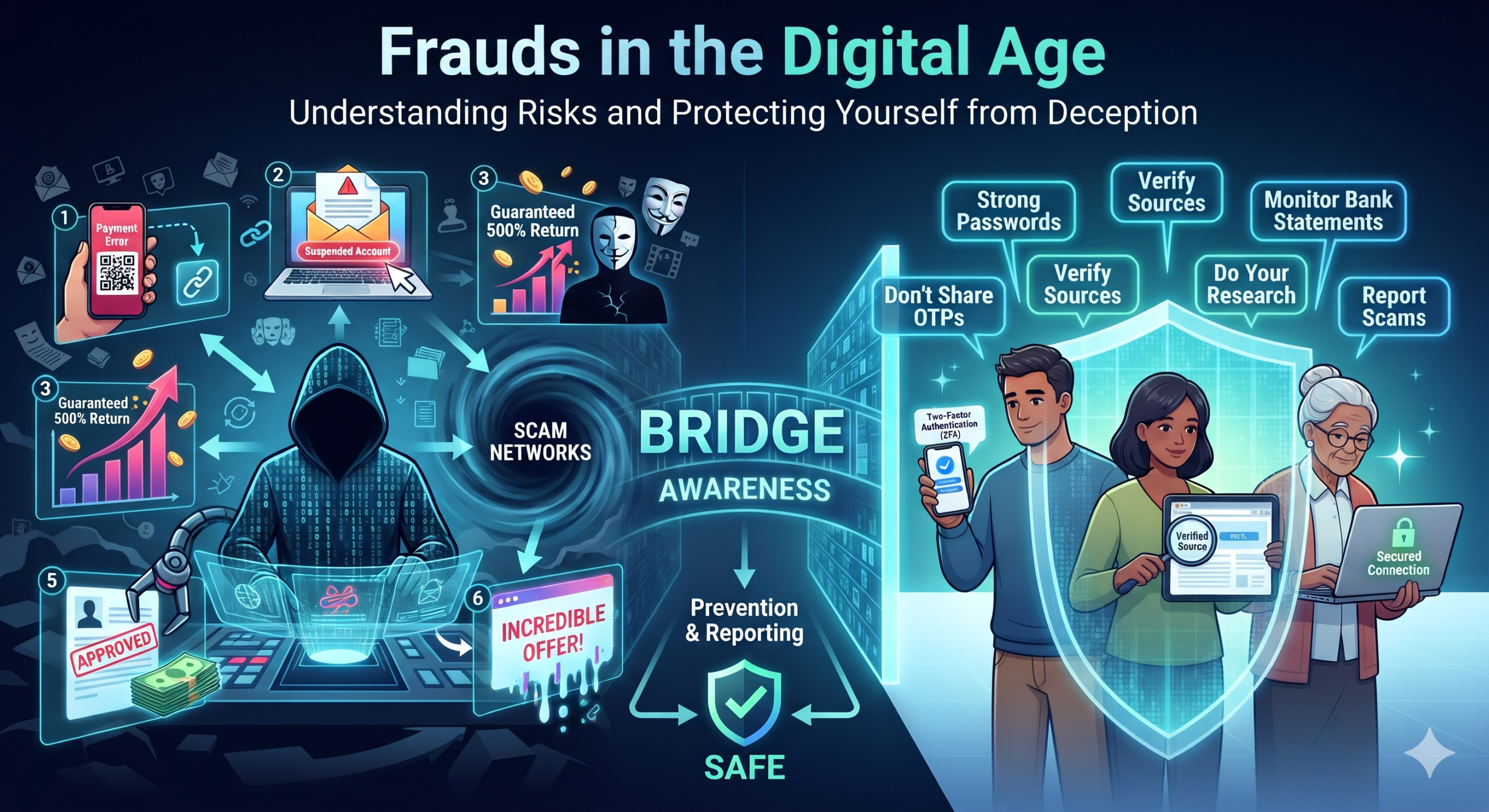
Frauds in the digital age is becoming a growing concern as more people use the internet to communicate, shop, bank, and do business. While technology has made everyday activities easier, it has also created new opportunities for scammers and criminals to steal money and personal information. Fraud can happen to anyone, whether an individual, business, bank, or government organisation. Understanding common types of fraud and recognising warning signs can help you protect yourself from online deception.
Fraud is completely indiscriminate – fraud can happen to anyone. It can happen to an unsuspecting individual, a business, a bank, or even a government organisation. It can involve any form of financial deception, stolen identities, empty promises, deception through communication, or illegally accessing data and information. Therefore, the better you understand the basics of these various scam types, the safer you’ll be with your personal information.
Understanding the Meaning of Fraud
Fraud is the deliberate act of deception to enable you to gain something to which you are not legally entitled. It’s deceiving someone or an organisation by false pretences, dishonest statements, or concealment of facts.
Fraud is possible in the real world and in the digital landscape, with both traditional and newer approaches. Traditional schemes include forged documents, false investment opportunities, and sneaky business deals. Newer scams involve websites and imposters looking to capture personal information, launder money, make fake phone calls to get you to compromise valuable accounts, and more. That’s what it all comes down to: deception to extort money or information.
Prevalent frauds you should be aware of
Fraud, on the other hand, has many different types, depending on the machine or person it is targeting. Here are some of the most common variations!
1. Online Payment Frauds
Sure, digital payment methods are easy to use, but scammers will try to steal from you through fake payment requests, phishing links, and fake QR codes. Some even pose as a buyer or seller to scam you into confirming a purchase.
Always check to see if you actually owe the money and store your banking login in a safe location.
2. Phishing and Email Scams
Phishing is the concept of sending emails disguised to appear as if they are from trusted organisations. An example might be an email saying your account has been suspended, there’s a payment to verify, or there’s a security issue.
The aim? To persuade you to give away login details, banking info, or anything else via phishing sites.
3. Investment Frauds
How about all those schemes that guarantee sky-high returns with little to no risk? You guessed it – this is one of the most common types of investment fraud. Scammers draw investors in using fake track records and testimonials, false opportunities, and more.
Before you invest, do your homework – authenticate the organisation, understand what you’re getting into, and avoid decisions based only on beguiling statements.
4. Identity Theft
ID Theft: Someone steals and abuses your personal info without your permission. They may open a fake account, contact your bank or other financial institution, or buy something using your identity.
Protect your ID, passwords, and personal records.
5. Employment and Recruitment Frauds
Looking for a job? Watch out for fake recruitment offers. Thieves may send you offers with attractive salary packages, pose as legitimate employers, or ask for money to secure a job.
Reconfirm company details, official communication, contracts of employment, and recruitment arrangements before releasing documents or money.
6. Shopping and E-Commerce Frauds
Have you ever come across an online shop with incredible offers? Some are just scams collecting your money, while others pretend to be an established name.
Reduce the risk by checking website information, seller feedback, the return policy, and secure checkout.
Warning Signs of a Potential Fraud
Catch Signs of Suspicious Behaviour Early and Protect Your Hard-Earned Money and Property. Watch out for these signs:
- Promises assured returns or profits at extraordinary rates of return.
- Requests for Passwords, OTPs, PINs, or other confidential banking details.
- Messages creating unnecessary urgency or fear.
- Unrecognised links demanding immediate account verification.
- Job offers that require questionable registration or processing fees.
- Unverified businesses with incomplete contact information.
- Financial pressure to ‘give away’ money.
What if the email says I have a problem or is too perfect? Do your research before taking action.
How Individuals Can Protect Themselves
Stopping the rise of fraud boils down to two things: awareness and good digital citizenship. Here are some tips to help stay clear of Facebook scams:
Ensure your online accounts have different passwords and turn on two-factor authentication in supported accounts.
Check with the source: Contact banks, companies, and government departments you deal with through their websites or through verified customer support channels.
Don’t open any attachments or submit sensitive information on sites you are not familiar with.
Don’t share your OTPs, PINs, passwords, or banking credentials with anyone you don’t know.
Keep an eye on bank statements, account alerts, and payment histories for any suspicious activity.
Investment: Before investing, do your research. Check that the investment providers are registered and reputable, as well as genuine.
What Should You Do If You Get Frauded?
- Act fast to limit further damage.
- If you’re scammed and it involves money, ask your bank or payment company to report the scam and put any safety measures into place. Change passwords if you’ve been compromised, close your cards if you need to, and keep a note of transactions, screenshots, and messages.
- Reporting and documenting promptly can help authorities look into the incident.
- Awareness as a Prevention of Modern Frauds
- Here’s the thing: Tech companies, banks, educational organisations, and government agencies all have a role in raising fraud awareness.
- Public education campaigns can teach you how to recognise threats and how to keep yourself safe online. Businesses can prevent attacks by training staff, monitoring transactions, restricting access, and conducting regular audits.
Be aware of new forms of scams being developed as fraudsters quickly adapt their tricks to the latest technology.
Conclusion
Frauds is becoming a rising concern as we continue to become more connected. Online scams for payments, identity theft, investment scams, and even fake job offer can affect us regardless of our age and occupation.
Be vigilant, verify offers, practice online safety, and report. This is your best safety measure against scams. Stay cautious of offers that sound too good to be true, safeguard your personal data,and be aware of types of online scams to be prepared to avoid being caught out.