 technicalmonks
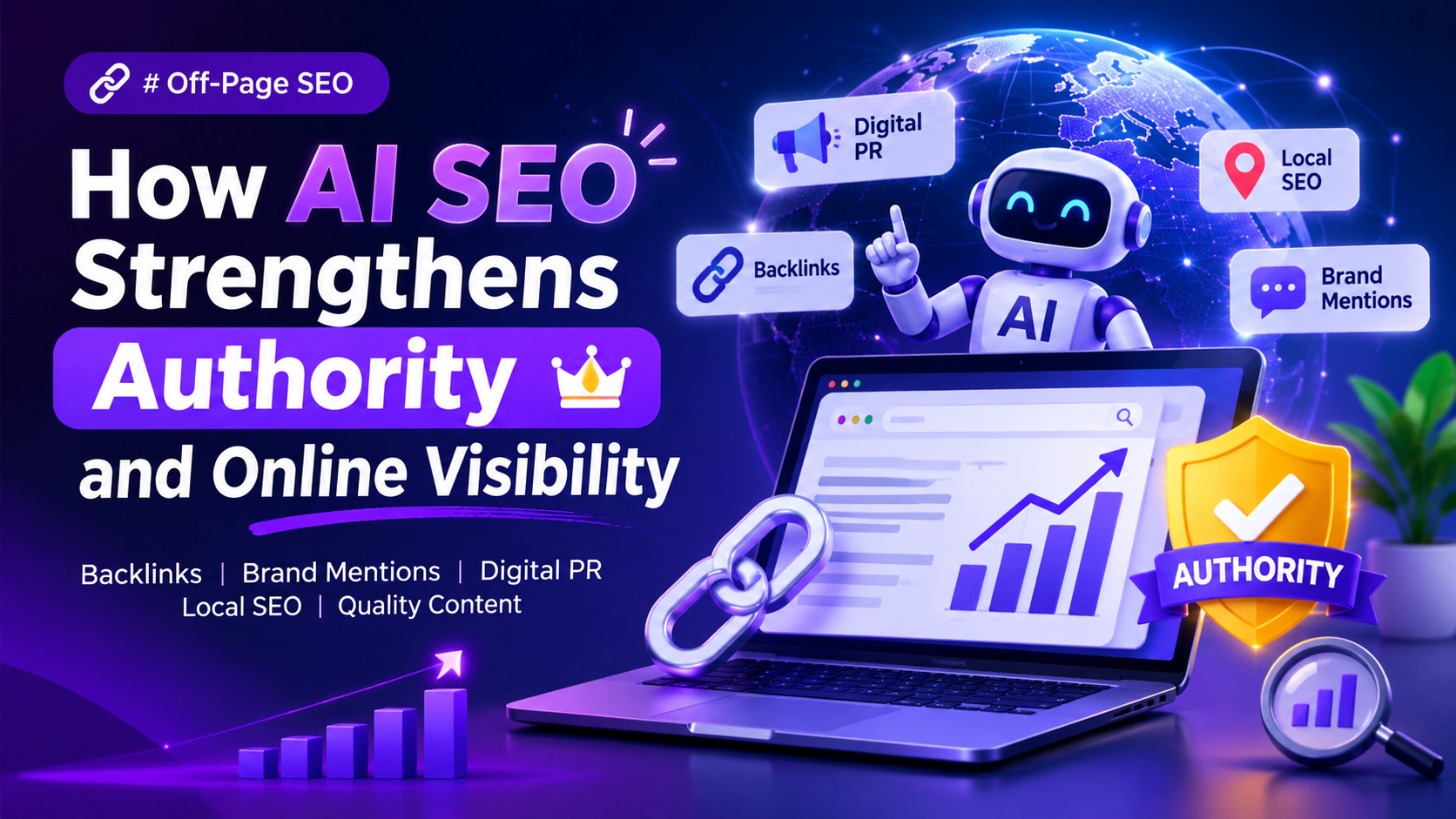
Your website itself isn’t the only place where you can improve search engine optimization. Search engines can scan the entire internet to understand the ways in which a business is mentioned and spoken about. Off-page SEO refers to these outward signals, and AI SEO tools enable marketers to explore opportunities and trends.
Relevant backlinks, digital PR, brand mentions, local citations, and authentic audience engagement are examples of off-page SEO. You can schedule the research with a wonderful AI, but you cannot substitute for valuable content, meaningful relationships, or good marketing.
What Is Off-Page SEO?
Off-page SEO involves other things done away from your website that can help improve its relevance and authority. Backlinks, another off-page SEO element, are a case in point: they can direct search engines to pages and identify how they relate.
Off-site content extends beyond the links. Mention of a brand, reviews and industry references, local directories and coverage all contribute to how potential customers find and assess a business. The impact of this content is relative, relevant, and real.
A sustainable approach is awarded for providing information worth referencing – not for trying to game the rankings with link schemes.
How AI SEO Can Help With Off-Page Optimization
Artificial intelligence for search optimization: AI SEO. Artificial Intelligence (AI) can be harnessed to aid search optimization. During off-page campaigns, software can analyze websites, group backlinks, identify connections between topics, and even summarize the competition’s activity.
For example, industry reports could indicate that key trade media are commonly publishing expert interviews. The business could provide original commentary or an authorized professional.
More efficient analysis, but suggestions still require human intervention. Systems can disambiguate context, ignore the quality of locations, and make silly suggestions. Check the sources and the relevance and editorial quality.
1. Find Relevant Link-Building Opportunities
Backlinks can be most valuable when publishers are linking to a resource to help their readers. Backlink exploration tools powered by AI can surface relevant sites, find pages that have links to competitors, and categorize prospects by topic.
How to qualify prospects manually. Do they have an actual audience and publication of appropriate content? A referral from a similar publication is more valuable than links from non-similar directories.
Produce linkable assets such as original research, useful guides, expert roundups, or actionable statistics. Outreach should clarify the benefit to the publisher’s audience. Don’t buy links and don’t send thin spammy blasts.
2. Use Digital PR to Earn Brand Mentions
Digital PR engages with the press, content creators, publishers, and industry communities, providing a way to raise awareness and generate organic references.
AI-enabled tools can track conversation themes, organize queries from journalists, and sift through the chatter for insights. Marketers can leverage the information to create timely input based on real expertise.
A good pitch is more than an announcement: give original data, account for an industry change, say a quote from an expert, or showcase an effective solution. Fact-check and adhere to publication guidelines.
3. Monitor Brand Mentions and Online Conversations
Business Mentions – people might talk about a business but not make an association. Twitter Monitoring Mentions reveals what people are talking about and gives you a chance to engage effectively.
AI listening analytics can categorize comments into topics or sentiment and identify trends and common issues. Any auto label can be incorrect, so check the original conversation before using it to reply.
Where no link is provided to a relevant mention, readers may be assisted with a courteous request for attribution. Don’t pressure publishers! We’re looking for accuracy and helpfulness!
4. Strengthen Local SEO Signals
For local businesses, it is all in the details. Be sure to use the same name, address, phone number, hours, and other details wherever you list.
AI can flag a discrepancy in the listings, highlight the repeating themes in reviews, and produce a draft answer to be approved by the staff. It can also show what frequently asked questions should be answered on your website or business profile.
Ask for truthful feedback following a real visit. Handle reviews courteously, maintain customer confidentiality, and don’t submit fake ones. Customers are very trusting of local providers and depend on honest communication.
5. Build Relationships Through Useful Content
Guest posts, expert roundups, podcasts, webinars, and communities can all be pathways to the right audiences for a brand. They’re most effective when founded on real expertise and offer value beyond a link.
AI SEO can scan up guidelines for publications and social media, identify other publication interests, and draft talking points. These will still need to be checked and shaped by a human editor to ensure individual pieces are original, factually correct, and directly relevant to the intended audience.
Do not submit duplicate guest articles to the most dispersed possible locations. Select appropriate sites and add value with your contribution.
6. Analyze Competitors Without Copying Them
Competitor backlink analysis can also uncover key papers, publisher names, keywords, and so on. Using AI-automated tools can show groups of referring domains, as well as content themes or gaps in visibility.
Consider results as research rather than as a list of things you should copy. A competitor might have a link from an association that is not a good fit for your business. Analyse each prospect separately and look at who they’re reaching out to.
A Practical Workflow for an AI-Assisted Campaign
Begin with one specific goal, for example, gaining points from the right industry, or better local discovery of your brand. Specify where the campaign should go and about what. Use AI tools to generate potential publishers, group them, group by subject summary (what are they about), and check the websites, recent page content, audience fit, and editorial policy.
Develop a truly helpful resource or expert submission in advance of reaching out. Customize for each person, provide a benefit to the reader, and track responses and placements. Post-publication, monitor the validity of references and hyperlinks, and study referral traffic and engagement after the data has settled for a while. This workflow allows AI to be a supporting actor, and people to hold the spotlight on quality, outreach, and choices.
Measure Results and Maintain a Quality Focus
Off-page SEO will require patience. Monitor: Relevant referring domains, links earned, brand mentions, referral visits, local reviews, and organic visibility. Quality and context of those references are more important than sheer volume.
Use analytics to determine whether campaigns are reaching the right people and contributing to business objectives. Log outreach and track progress frequently. Adjust strategies that generate off-topic links or poor interaction.
Pitfalls to Be Aware of
Don’t opt for link schemes, private blog networks, paid links, directories, or bulk outreach methods as shortcuts. These shortcuts can harm your reputation and are against search spam guidelines.
A prospect list created by AI is also not free from inaccuracy, and the authority score does not always indicate that the site will be valuable. Metrics are estimates. They are not validated by search engines.
Conclusion
Off-page SEO emphasizes growing awareness with appropriate backlinks, digital PR, brand mentions, a positive local image, and professional relationships. AI SEO speeds up research and tracking, yet like every other part of SEO, the results rely on intuition and real value.
Acquire pertinent references. Keep up-to-date profiles. Address reviews thoughtfully. And manage results. A combination of consistent off-site procedures and checked AI-Assisted insights provides sustainability to this authority and presence of mind.
Read this :- Video Editing: Essential Digital Marketing Strategies for Engaging Online Audiences